Friday, April 22, 2016

Burn, Bane and Butcher

We're going to talk about something on the serious side today.  Cancer.  It is a word that incites fear, which I believe is one of the worst feelings to harbor, and I also believe is unnecessary.  So little is understood about cancer by the masses, it is seemingly a death sentence.  According to cancer.org the average man has a 42% chance of developing it in their lifetime, and a woman, a 36% chance.   However when presented with preventative actions to better your chances, most people "keep on scrolling."  Most submit to defeatism before they even have cancer with a quiet fear they will someday hear the dreaded diagnoses (eg. "everything kills you these days, I'm not going to change anything").

Lets talk about today's modern treatments for cancer:

1.  Chemotherapy (bane, or poison - kill everything in its path and destroy your immune system)
2.  Radiation (burning - just scorch the tumor off)
3.  Surgery (cut it out like a butcher to a flank steak).
4.  Go home and die.

 Wow!  It is not my intent to start off sounding bleak, but the “reality” of getting cancer, generally is.  We are in the 21st century and that’s the best we can come up with for conventional cancer treatment? After billions upon billions of dollars have flooded through the “cure cancer” foundations and research and awareness groups…this is really the best we can do??

It makes me furious.  And you know why it makes me furious?  Because the barbaric treatments used in conventional medicine today are ineffective and outdated.  Not to say that it never works.  Sometimes people survive, but they barely survive, after being processed through a hellish "one size fits all" cancer cattle chute.  

What most people don't know is that there are pockets of doctors out there - virtually unheard of - whose progress is suppressed, who are actually curing cancer at wildly higher success rates than conventional treatment.  These treatments come with low, if any side effects, and don’t kill your body in the process, but rather restore your immune system so that it can target the cancer and rid your body of it.  

My question is, why are the methods used in these holistic treatments completely ignored and considered quackery by “modern medicine” when there are literally thousands upon thousands of cancer cases cured by these methods (what conventional docs call "spontaneous remission")?  More than that, when the average joe hears about the possibility of these treatments working, why do they scoff or ignore?  Why doubt? Why turn a blind eye?  I mean good God, if there’s something to it, isn’t it worth your time?  We are talking life or death here.  We have the gift of endless information at our fingertips, and yet we are going to leave it all in the hands of Dr. Soandso who learned everything from a text book funded by big pharma, who’s recommending burn, bane and butcher which is one of most damaging options & has the lowest cure rates in comparison? If holistic, naturopathic methods prove to have more effectiveness than the conventional treatment, than lets talk about what the real fraud is!

You see, I’m a little passionate.  In fact I’m really angry about this, but I’m hopeful for change.  I’m anticipating people being fed up with the way things are, dying or watching people die miserably without knowledge of options, without hope.  Truth really can only be contained for so long.  Awareness is really all I can offer, so take what I say or leave it.  But I’ve had a strange obsession with researching alternative cancer treatments for almost four years now.  I’ll state clearly here, no I’m not a doctor and I’m not telling you what to do in regards to treating your or someone else’s cancer.  But I urge you to have a mind of your own and look into your options before jumping on the chemo-train (yes, you have more options than the above four)! 

For the record, lets look at some facts about cancer.  

Cancer is a symptom.  

You don’t just “get” cancer like you catch virus.  Cancer is a symptom of something else going wrong in your body.  When your immune system is consistently tending to some other ailment in your body (particularly anything causing long term inflammation), when it isn’t given the proper support in food, supplements, emotional wellness, exercise, proper alignment, etc. it becomes too weak to fight off cancer cells.  We always have free radicals floating around in our bodies.  Right now even.  If allowed, these free radicals become cancer cells.  But in a healthy, unstressed, well nourished body, your immune system kills and flushes these guys out on a daily basis.  

Chemo isn’t a cure (hence why they're still looking for "the cure").  

If you are dealing with cancer or know someone who is, next time you go to the doctor, ask them, “What is the probability this treatment will cure my cancer?”  Don’t let them talk to you about how it will make you feel or how it’s the latest longevity drug.  Ask how possible it is that it will cure you - make you better, cancer-free, healthy.  Ask them the likelihood of it coming back.  Ask them what could have caused cancer in the first place (genetics cause only 5% of all cancer cases.  What causes the other 95%?)  Ask about the symptoms, and if any symptoms of your chemo are that it can actually cause cancer (because guess what, it can and it does. It’s on the side effects of many chemo treatments.  You can GET more or different cancer from chemotherapy).  Most people know chemo takes the good down with the bad, it doesn't differentiate.  A substance that kills is just that, a killing substance.  

Cancer stem cells are basically immune to chemotherapy.

What many don't know is that most tumors are made up of daughter cancer cells, developed off of a parent cancer stem cell.  Chemo does kill daughter cells, but the stem cells are much harder to kill this way.  So after the daughter cells are killed off (a tumor is shrunk for example) the parent stem cells are still alive and well, traveling and multiplying throughout the body, except this time, the immune system has been blasted by a chemo A-bomb.  Thats why so often the cancers return, often times in another location, and the lack of healthy immune system is why the second time around it is so much more aggressive.

Cancer isn’t a death sentence.

Here’s the truth.  Cancer can be treated and cured with natural, holistic treatments that are extremely scientific, in fact more so than the famous 3 Bs.  You don’t have to believe me to find this out.  Learn for yourself.  Most doctors are not allowed to discuss them (can lose their license over it!), don’t know about them, or bash them due to the status quo.  But it is possible.  People are not just beating cancer and other degenerative illness with whole body wellness, but are conquering cancer holistically and living long, healthy lives with revived vitality.  

All of my information was gathered from the sites below, and then some.


And in your nutrient dense diet, don't forget these essentials:

Please don't believe or not believe me because of a preconceived understanding.  Please look into it yourself.  Know your options.

Shaloha!

Wednesday, April 13, 2016

Vetiver is Bett-iv-er

Maybe it's a love my dad secretly instilled in my mind when I was young - secretly only because I remember hating playing the "what's that plant" game, or maybe it is true that my hippie side has blossomed over the years,  but whatever the case, I now have a deep love for learning about plants and their usefulness.

This particular plant I'm going to share with you is like the Batman of plants.  Not Superman, because it can't really fly or have actual supernatural powers, however it's natural skill set is used with hero tactics, and looking at it you'd never even know it was a like a man in a bat suit, saving lives in its free time - it's just that unassuming.

It's called vetiver.  You probably already gathered that. 

All you oily people are like "I have that essential oil!"

And to you I say yes, yes it is a great essential oil...but it is also so much more.

What is Vetiver?

Vetiver is a grass. A big bushy stand alone clump of grass.  Over here on Kauai, we are surrounded by an irritating, invasive, tall clumping, scratchy grass we call "buffalo grass" (aka guinea grass). Vetiver looks a lot like buffalo grass, but the differences in it's innate qualities are huge!

Vetiver grass has a root system like Asha Mandela's dred locks: thick and ridiculously long.  Above ground it reaches heights of around 8 feet, and underground, the roots reach lengths of 9+ feet.

A great quality of vetiver is that many varieties are not self propagating - meaning you have to propagate it purposefully for it to spread.  It will not take over your yard - which you cannot say about many grasses. All in all, it doesn't appear to be that useful.  Ah, but you could say the same about Bruce Wayne.

Uses

This plant is on the up and up.  Be ahead of the game and start using it already!  Vetiver is helping solve huge problems worldwide, it is so dang affordable, and it's applications span the spectrum!  

Vetiver Solutions
vetiver.org
The bushiness of vetiver makes it a great hedging plant.  Since it's roots run thick and deep, if planted on contour (horizontally level) rows, plantings about 3-5" apart and rows about 3' apart on a hillside, it is perfect for erosion control.  This is coming in particularly handy for our property, as it is largely a steep, eroding slope.  The root system does not branch out around the plant, but down instead.  This means planting between rows is totally possible (most grasses choke out other plants surrounding them).  Again, the plant does not spread like other grasses, so it will not invade your yard.  

The upper half of the plant is thick and strong at the base and perfect for catching debris and slowing and spreading water runoff.  Over time, if planted on a steep slope, it will begin to create natural terracing as dirt and debris collect behind each hedgerow and settle into a flat area.  It grows in a wide variety of soils & loves the sunshine.  

Vetiver is a purifier!  The roots filter soil and water like a boss.  It is not afraid of cleaning up waste contamination, metal toxicity, chemicals, scum and general impurities.  They've actually created this floating vetiver billboard in Manila to clean up a river.  Something my little island of Kauai could follow suit on, as surprisingly our streams & rivers are highly polluted!


Floating Billboard
Thought the usefulness of the plant is done? Nope.  Chop the tops to refresh the plant once and a while and you can use it as soil enriching and protecting mulch.  Deter pests from areas where it's planted and from burrowing because they don't like the smell of the roots. Its multifaceted benefits make vetiver a permaculture staple grass.  Here's a nice little visual of how it can change the world if done right.  


The Perfect Grass
We're Not Done Yet!

All that was just how it's useful when it's planted in the ground.  I'm not even going to go into detail on the other half.  But here's the summary: When used for it's parts (oil, medicine, materials, water) vetiver has body, mind & emotional worth!  

Vetiver naturally...

  • cools your body & environment
  • treats ADHD & insomnia
  • boosts energy
  • is a super antioxidant
  • drink infused root water for blood purification
  • great for treating skin imperfections and problems
  • can put you in "the mood"
  • helps with anxiety
  • repels termites, mosquitos and other critters
  • can be made into blinds that cool the home and give off a relaxing scent & other natural fiber household items.  
In my own life, we have just recently planted vetiver along our steep hillside, and it's in it's baby stage.  I plan to plant a bucketload more, and I'll do an update when it's erosion control duties are in full effect.  I also have the oil.  When diffused it makes me feel like I just drank a glass of red wine - super relaxed and sleepy and just a little bit goofy.  Also, I'm a little obsessed with putting just the smallest amount on my wrist and sniffing it throughout the day.  It smells glorious, but a little bit like a man's cologne...so "just enough" to keep me stress free and sane through the day.  So good.

For a full reading on the value of vetiver's material properties, just click on the picture below, or here

Courtesy of Dr. Axe
That being said, you heard it from me. Vetiver: the batman of plants.  

Shaloha!

Wednesday, April 6, 2016

The Other Holy-Days: Passover

“Tis’ the season!”

Wait, aren’t the holidays over?

Ah, but they are just beginning.  You know what I love about the biblical feasts/holy-days?  While they aren’t all technically “feasts”, there are 7 celebrations and two of them span a week!

Talk about who knows how to throw a good party.  That would be GOD.

How my family got to where we are is a long, long, involved journey, but one I am finding out many besides us are taking.  The long and the short of it is that the feasts are in the bible, and xmas and easter as they stand…aren’t.  It’s a can of worms you’re welcome to open on your own.  I can’t be responsible for your life’s traditions & belief system turning upside down.  Only my own.

However, I can tell you how rich and interesting the biblical holidays are, and that the first 3 in the 7 series are upon us!

An Introduction

I don’t want to lay it all on you at once, so we will start with the first 3 spring days that are back to back.  It is likely, if you grew up in the church, that they will sound familiar.  

1.  Passover
2.  Unleavened Bread
3.  First Fruits

Passover starts the series, on the 14th of the first month.  There are differences in how people who celebrate the feasts track these holidays, but mostly, if you look it up on google, there’s a general understanding (not that the majority is always right! ‘Cause sometimes it’s not.  But we’re keeping it simple).  

It was (and is still) celebrated as a memorial of the Passover & Israelite exodus out of Egypt, but for those who believe in the Yeshua Hamashiach (Jesus Christ), you get to see how these days also played an important role in ushering in the Messiah, and how paying attention to the fall feasts will bring to light some of the “end times” debacles.  

Back in good ol’ Leviticus (one of my personal favs), YHWH calls his feasts days “moedim” or “set times,” considered to be “holy convocations” or “rehearsals”, that the LORD gave Moses to give the Israelites to observe.  He set the dates and some guidelines to follow regarding them and said to celebrate them.  What is actually commanded to happen on these days is minimal.  

eg. Passover, & unleavened bread (somewhat rolled into one): getting rid of leaven in your place, eating unleavened bread, stop working on the first and seventh day of the festival (see Leviticus 23 for the rundown).  Pretty easy stuff.  As far as the sacrifices go, since there’s no temple, it would actually be against the law to offer any sort of sacrifice in your backyard and what not, so don’t bother trying.  In fact, we can’t “legitimately” observe these holidays, so considering them as memorials, or rehearsals is a better way of looking at it.  

Now, as it would happen over thousands of years, there have accumulated some traditions surrounding these festivals (the traditional pesach meal for example).  They are great!  They can be fun and very meaningful, and full of wisdom.  But lets just remember they are man made traditions, ok?  However the feasts themselves are God-made and I believe of a lot more importance than we give them credit for. 


How the First 3 Feasts Weigh-in with the Church

Not to limit this to the first three - as they all are important to the Church! But for the beginning, lets look at why the first 3 feasts carry importance to the church today (aside from the fact that it's in the beginning of the Bible and the rich heritage of the Christian faith!):

1.  Yeshua (Jesus) died on passover (the passover lamb, right?)
2.  Yeshua was in the ground by the day of Unleavened bread (leaven is often likened to sin - he was buried although had no sin)
3.  Yeshua was the “First Fruits” of the resurrection on the feast of First Fruits (my intent is not to offend, but no, easter and First Fruits are not the same). 

Remember, these were days that the Israelites had already been celebrating for forever, and Yeshua is making his biggest moves on the days his Father said to rehearse on.  Rehearse for what?  Could it have possibly been rehearse for this? His son’s death & resurrection?  

Just sayin’.  

Imagine if they’d forgotten about the festivals altogether for some man-made tradition long before Yeshua came along…the actualization of these first three feasts would have been entirely missed!

What’s even crazier is how the latter four festivals sync up to the return of the Messiah and things to come.  The parallels are fantastic.


Wheels turning?

So the idea is nice, but in all reality, it’s hard to give up long held traditions.  If we even want to, how can it be done?  Especially with older kids?  

Granted my husband and I started this journey pre-kids, but I can tell you with certainty - it’s a weaning process.  For all involved.  The good news is, while I recall christmas memories with warmth and happy times (my parents did great christmases!), I don’t miss it now, nor am I nostalgic about not raising my kids in the same traditions.  I must never have a particular attachment to easter because that one I weaned from easily.  I’m more excited than anything, now that we have kiddos, to instill some longstanding Feasts of the Lord traditions with our little ones (lighting the candles on Chanukah was a hit with our almost 2-year-old this year).


Since we are replacing our inherited traditions (christmas and easter) with the moedim, we are going through a huge learning curve.  We are failing, learning more, accomplishing, creating and mostly just rolling with it.  We don’t pretend to have it all figured out - we’re total nubes, wondering how much tradition on the Jewish side of things we should include (since we aren’t religiously Jewish, but they’ve been celebrating the feasts for ages, so they have some nice ways to celebrate), or should we just make it our own?  Following of course, the basic outline of Leviticus 23.  


Kid-Application

If you’re worried it won’t be as fun, don’t be!  The feasts are most definitely family-friendly. 

A messianic buddy of ours does some educational & fun activities with his family…In the ten days leading up to passover he puts red dye in water vessels (water turns to blood), uses black out blinds (darkness), has ice fights (hail), etc. all to commemorate the plagues before passover.  

There are always traditional games like cleaning the leaven out of the house and then having pops and the kids go around searching like detectives with a light and feather to sweep up “missed” (purposefully left) bread crumbs.  I think we will be giving this one a try this year.

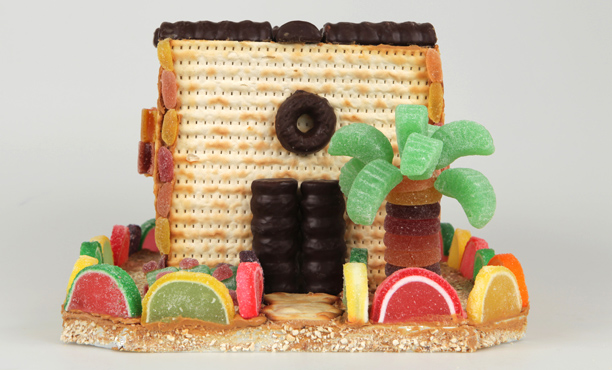
I’ve seen crafts like building houses of matzo (could put red licorice over the front door).  

Even just watching Prince of Egypt as a family after a commemorative passover meal every year sounds nice!  

There are many ways to make it creative and meaningful for the whole family, and each feast of the Lord has so much depth, history, & relevance to a follower of Christ.  More than we realize - more than we’ve been taught.

Above left:  Planetsmarty
Above right: Coolmompicks

Real Talk

I get kind of bummed out at the fact that these feasts are universally ignored by *most* (not all) Christian teachers.  But the tides are changing because people are curious. Others are seeing inconsistencies in our traditions vs. what’s in the bible.  I’m seeing it happen around me, and it’s exhilarating to see others searching these things out for themselves (I’m not the only one! *sigh of relief*).  If you're one of them, there are tons of resources.  Keep looking.  Keep searching.  It's an endless, awesome adventure!

For those on the search for information on the feasts, here are a few links & books to get you started:

-A lovely set of sermons on the feasts of the Lord by Mark Biltz  
-Some history and alternative thoughts on christmas & easter
-A great book detailing the feasts, their memorial & their fulfillment (or future fulfillment)
-This book about Torah and it's relevance to Christians


Shaloha!

Thursday, March 24, 2016

Why Essential Oils Aren't Just for Your Crunchy Auntie


If you haven't heard about oils yet, you probably live in a cave.  But I think even cave dwellers are rootsy enough to have heard of Essential Oils, so maybe a cave in Siberia.  Or  the most northern ice caves of the world.  Needless to say, they are everywhere, and moreso as of late.

A few years ago when I was pregnant with my first I was trying to figure out who I wanted to be present at the birth.  I was a little hesitant about the "full exposure" aspect of birth and wanted, preferably, no one I knew too well there besides my husband, but someone who could help my husband that wasn't on hospital staff.  Basically a midwife or doula.  I decided to go with a student doula.  I had a list of some students I received from a local instructor, and like a stalker went on their FB pages first to see if I liked their FB "vibe"-- yeah, I know.  But admit it, you'd probably do it too.  

Then I called the one who it seemed like in real life we could be friends.  We met up, and sure enough I liked her.  Our meeting made it clear that I feel comfortable with her, and we had one more meeting prior to the birth just to go over my plan & other details.  While this blog is not about doulas, I do highly recommend one.  Or a midwife.  They are like water in a desert, and my husband was so grateful to have the help during my 36 hr natural (hellish) labor.

Now mind you, I'm working on changing this - and slowly making progress here - but I tend to put people into boxes.  At the time, I was a few steps back from where I am now (still progressing - hopefully always progressing) and she said one thing that caused me to immediately place her in one of my categorical mind boxes.  She said "I'm into essential oils, so if you are interested in that, it's something I offer with my doula services."  

Insta-crunchy.  In my mind I put her into the doula-east-side-flower-child-tree-hugging category.  Not that I have anything against this, but since she said that I really "understood" her better - since I so accurately categorized her. *note sarcasm here*  Regardless of my category placing, she did an amazing job as my doula, gave me lower back massage in the contraction phase, brought a massive bottle of coconut water, made the best soup I ever had, and had a few tricks up her sleeve that enhanced her awesomeness and made our birth epic.  But when she offered oils I was like "oils? Oh, no thanks I'm not a hippie".  

Oh how the tides have turned.  You see, you just don't know what you don't know 'til you know it.  And you know, even though I use oils now, I'm still not like a hardcore beatnik - all things considered - although I guess how granola one is is subjective.  I've had a number of my sister's friends reference me as her "hippie sister."  What. Ever.

Now I am part of groups with names like Oily Life and Oils baby! - dedicated to the sharing of EO information between oil lovers.  You know, it definitely is a "latest thing," however, it's a thing that has wild amounts of history, science and studies (and controversy) behind it's name.  It's been used since the Egyptians (or longer) for health, beauty, cleaning and the small & great pleasures in life (smelling fresh, pleasing home aromas, relaxation, the list goes on).  

I want to share with you why the EO craze is not just for the crunchy, but also for normal people across the globe.  There are legitimate reasons why so many are obsessed about them, and a few reasons why it has spread like wildfire as of late, to half the women you know.  

The Basics

1. Health Benefits

If we think of these little beauties as what they are - a plant with vitamins & minerals & other beneficial properties created by God, distilled and condensed into a super potent version of the original plant - the qualities that you would normally get from such plant are now packed into powerful little droplets.  It takes something ridiculous like 22 pounds of rose petals to get 5 mL of Rose oil (hence it's crazy price!)  So imagine, knowing the obvious health benefits of herbs like oregano, clove, thyme, rosemary, lavender, frankincense, lemon, tea tree, etc...and responsibly using them for all manner of ails via diffusion, topical application & in some cases taking internally, you are getting a mega-dose of the properties of the plant in each drop.  

EOs used in these ways have been used in studies like this and this and this shown to cause significant decreases of blood pressure, heart rate, and skin temperature.  They can help those suffering from behavioral disorders like ADHD, enhancing positive emotions and decreasing negative ones.  And this is the tip of the iceberg.  Here's some more health benefits:
  • anti-viral, antibacterial, anti-parasitic, anti-fungal, and antiseptic.
  • activates the immune system
  • a system of delivery for nutrients directly to cells.
  • is absorbed into the body under a half hour, without any extra garbage (additives).
  • enhances wellness on all levels: physical, emotional and spiritual.
  • increase your frequency
There is a wealth of information out there on the health benefits of essential oils - and one of my favorite facts is how hard big pharma is attacking the EO movement.  I'll give you one guess as to why, and it's not because they are ineffective

2. Beauty

EOs were buried with the kings and queens of Egypt, and while we know they are of benefit to our health, unfortunately they won't keep you alive forever.  But knowing how and who used them in the past shows just how valuable they have been throughout history.  Frankincense and Myrrh were gifts among gold for baby Yeshua (Jesus).  It's one of a few "fads" that keeps on keeping on.  I've used them on minor cuts and burns, moles, wrinkles, sore muscles, my armpits, canker sores, head & sinus pressure, yeast, rash, and even as an oil-pulling mouthwash (diluted with coconut oil)... to name a few.  


The floral scents are often used in candles, perfumes, lotions, creams, natural deodorants, powders, face washes, hair treatments...the list goes on.  I don't have to link you up to anything, just search "essential oil beauty treatments" on pinterest and your search will be complete.  Don't believe me, look for yourself.  Personally I love me some jojoba mix/frankincense/lavender on my face right before bed.  Relaxing and great for my skin.  

People buy such expensive creams and lotions full of additives and unnecessary preservatives when all you need is a couple bottles of these babies and maybe some shea butter/coco oil or carrier oil of choice and you can make like-creams for a portion of the price over and over and over.  Like honey, a good quality essential oil does not have an expiration date.  

3. Quality

Speaking of quality, not all essential oils are made the same.  Companies that sell EOs for dirt cheap are not selling you pure essential oils.  In fact, all they need to have to be labeled "100% pure" is 30% EO.  Yowzers!  The rest can be additives.  This is a topic I did more than my fair share of research on, but with all the information out there, I finally went with two (or 3) companies that I found had responsible and transparent preparation practices.  This blog has a wealth of information on this topic.  

What it comes down to is choose your own, but remember that you are putting a very concentrated product into your air and on your skin (and possibly internally - although I don't suggest this with any company besides Young Living, as they now have a line labeled safe for consumption - again, responsibly - there is a lot of debate here too, but I have used some internally and I'm still alive).
  
My allergy recipe: Lavender, Lemon & Peppermint with a spoonful of local honey.

If a brand of oil got it's plant from a farm grown with pesticides, those are now very concentrated on and in you.  If there are chemicals used to distill the plant, those are now very concentrated on and in you.  I use and trust these brands:  Young Living and Rocky Mountain Oils.  Although I don't use it, I would consider doTerra a solid competitor in quality to the aforementioned.


4. Cleaning

While it does make a difference, using any ol' brand of EO for cleaning purposes is probably "ok".  Not great, but ok.  I have a problem using my most expensive oils to clean a dirty bathroom floor.  If I can find a cheaper lemon - lets be real - I'll use that over the spendy one for cleaning purposes (I don't feel the same about my skin though).  


With the antiseptic, anti-bacterial and anti-fungal properties of a great majority of oils, turns out they make great cleaning tools.  Plus they smell fresh, are effective, and they are not toxic - which I care about, having two finger-sucking little people sprawling around on the floor all the time.

Well, I'm exhausted.  So I'm going to end this here.  But my point is this: You don't have to be a hippie to use essential oils.  If you like the idea of clean living, chemical-free beauty, enhanced health, fresh air & the like...then oils may be for you, too.

Do you love oils?  Tell me your favorite!

Shaloha!

Sunday, March 20, 2016

Permaculture: I Love You So Mulch!

Lets talk about mulch, ba-by.
Let’s talk a-bout de-bris,
Let’s talk about all the green leaves, and grass clippings,
Mulch can be…
Lets talk a-bout...Mulch.  

It’s much more provocative than it seems.  It’s like the “plain jane” you know that has a wild and crazy side once you get to know her.  

In case you were worried I was just writing about things for moms, I'm here to tell you no! That's not it.  My purpose of starting this blog is to share about my many - sometimes unconventional - interests, which span a wide spectrum -  in the hopes that maybe you'll learn something new (because I LOVE learning new things).  So we’re heading into the topic of permaculture: a topic we have not breached yet.  We’ve done oils, we’ve done mama, we’ve done parties, music, chanukah...we're on this journey together.  But now it’s time to talk about how to change the world, and how mulch is going to help do that, and make your life more exotic at the same time.

If you don’t know about permaculture, go look it up.  Or if you’re too lazy to do that we will get into detail on what it is some other time (it’s like the universe of all things “sustainable gardening-ecosystem-building” - an expanse of unexplored information constantly burgeoning).  I’m going to start with something more simple, an important element in permaculture.  Mulch.

Think:  Water retention.  Soil protection.  Organic resurrection.  

If I can rhyme to make it more alluring, I will.

Can I just say something, before I start?  I hate hearing people say “I have a black thumb”.  Because it’s a straight up lie.  It really is one of two things.  
1. You have not mulched. 
or 
2. You just don’t care to really learn about growing things.  

Sorry not sorry.  I used to have a “black thumb”.  But actually I was just a laggard who thought I could shove a seed in the ground and it should grow.  Plants have preferences too, you know.  They like water, some like sun, some like alkaline soil, some like acid - if your soil sucks, they need nutrients to grow just like anything else.  So don’t tell me you have a black thumb.  Just say you’re not interested in learning about what plants need.  You want your tree to give you fruit?  Lets learn to give your tree what it needs to give you fruit.  It will return the love a hundred fold.  You’ll be swimming in fruit.


Whew.  Needed to get that off my chest.  So mulch.  Let me tell you how I personally feel about mulch.  I have a friend who is a tree trimmer.  He has mulch coming out of his ears, and I haven’t told him yet, but I literally dream about the day our house is done so that if he needs to unload some mulch he can dump it all over our yard.

Another friend of mine used to trim trees with my tree trimmer friend.  He made connections with some county tree trimmers and now they come drop piles…magnificent piles of mulch in his yard on a regular basis.  Want to know how I feel about that?  Totally jealous.  I want mulch.  I want it all over, everywhere.  You might think “well that’s a little quirky” - but that’s because you don’t know mulch yet.  The pictures in this blog are credited to our friend with the mulched garden.  It is certainly paying off...look at those kabocha squashes!  I admire what his diligent work & creativity and a ton of mulch is resulting in for him and his beautiful family.  He's doing some awesome permaculture work here on kauai on the west side.  Check him out @westkauaifarms


So you want to know:  Why do I need mulch?  
Here you go:

1.  N(C)+3-6”M= -W  (I made that up - don’t you miss math class?)  In other words: Newspaper (or cardboard) + 3-6 inches of mulch = organic weed eliminator.  Ciao, Round-up! I don’t even need you, vinegar.  Im’ma mulch these weeds to death.  Mulch makes for a nice garden path material as well.  

2.  Hey, did you know after you throw down that newspaper/cardboard and the thick mulch layer, you’re also naturally attracting beneficial wormies into your garden?  These guys LOVE to enrich your soil and convert the paper/board into garden gold (worm compost).  

3.  THEN, get this.  If you sheet mulch an area, the mulch breaks down over time and becomes SUPER EPIC soil for your plants.  It’s EASY and it’s called “no-till gardening” or "sheet mulching" and it’s amazing.  It takes more time if you’re in a dry climate, but you are literally enriching the quality of soil just by topping it off with an organic mulch that has tons of other useful qualities.  Adding some organic manure before putting down your cardboard in the beginning process helps with fertility.

4.   Mulch RESERVES moisture.  When you have a solid top layer of mulch, you need as little as 10 percent of the water that other gardens do.  Some also acts the opposite in super wet situations - it absorbs excess moisture in flood, saving your plants from an anaerobic situation.  Sign. me. up.

5.  Mulch comes in all kinds of shapes and sizes.  Some organic material options:  spoiled hay (make sure no seed!), grass clippings, wood chips, rocks, dead leaves, garden clippings, living mulch…etc.

If you want to fall in love with mulch, watch this vimeo sensation: Back to Eden

I promise you, plain jane is gonna take off her shoes and show you her dance moves.


Shaloha!